
Iron and Steel Caravan Across Eurasia: The China-Europe Railway Express Reshapes the New Landscape of International Logistics
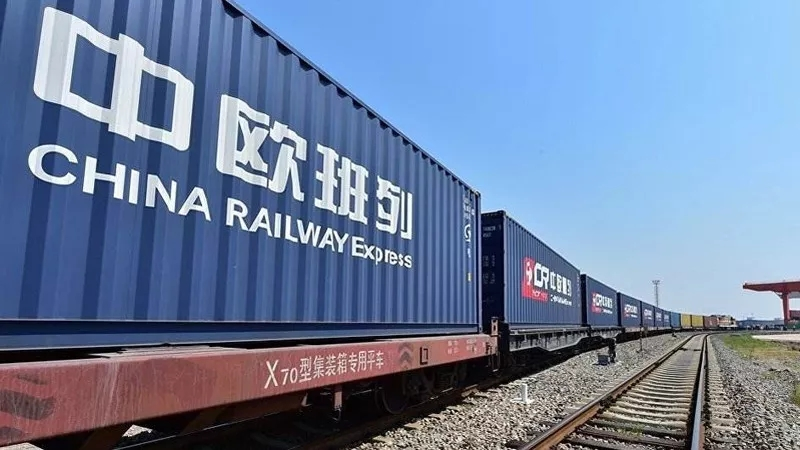
The China-Europe Railway Express, a fixed international intermodal transport service running between China and Europe as well as countries along the route, has become an indispensable backbone channel in the Eurasia logistics system since its inaugural run in March 2011. It is renowned for its stable transit times, cost-effectiveness, safety, and reliability. To date, the China-Europe Railway Express has reached over 130 cities in China and covers more than 200 cities across Central Asia’s five countries and 25 European nations, continuously weaving a denser network of connectivity across the Eurasian continent.
01 Improved Channel Network, Building Eurasia’s Logistics Artery
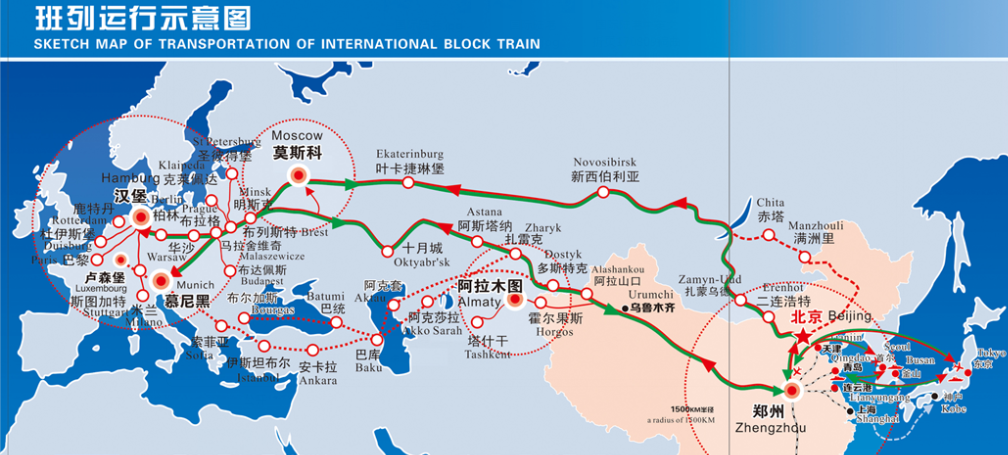
The China-Europe Railway Express is structured around three main trunk channels, forming a land transport system that traverses east-west and connects north-south:
● Western Channel: Exiting via the Alashankou and Khorgos ports, it connects to Kazakhstan, radiates to the five Central Asian countries, extends to Russia and Belarus, enters the EU via Małaszewicze, Poland, and finally reaches core European regions such as Germany, France, and the Netherlands. This is currently the route with the largest capacity and widest coverage.
● Central Channel: Exiting via the Erenhot port, it traverses Mongolia to connect with the Russian railway network, links up with the Western Channel, and penetrates deep into the European hinterland, primarily serving China-Mongolia-Russia economic and trade exchanges.
● Eastern Channel: Exiting via the Manzhouli port, it directly connects to the Trans-Siberian Railway in Russia, effectively covering Northeast Asia and the Russian Far East, and extends to numerous European countries.
02 Prominent Core Advantages, Creating Efficient Logistics Solutions
The China-Europe Railway Express achieves an excellent balance between timeliness, cost, and stability, offering businesses a cross-border logistics option that is faster than sea freight and more economical than air freight:
● Stable and Controllable Transit Time: Transport time is approximately 50% shorter than traditional sea freight, taking only about 15 days from Eastern China to Europe, with high punctuality rates, enabling stronger supply chain planning.
● Efficient and Convenient Customs Clearance: Digital upgrades at ports have shown significant results. For instance, import clearance at Khorgos port has been reduced to within 16 hours, and Manzhouli’s “Digital Port” enables data interconnection and rapid declaration, continuously improving overall clearance efficiency.
● Optimized Comprehensive Costs: Through intermodal transport and process innovation, such as the “China-Kyrgyzstan-Uzbekistan” road-rail model, cost savings of about 3,000 RMB per container can be achieved, along with reducing transfer time by several days.
03 Intermodal Coordination, Expanding Logistics Link Flexibility
The China-Europe Railway Express actively builds a coordinated “Railway + Sea + Road” network. Relying on models like “Rail-Truck Intermodal,” “Rail-Sea Intermodal,” and “Land-Sea Linkage,” it achieves seamless connection throughout the entire logistics chain, further enhancing end-to-end logistics efficiency and coverage capabilities.
04 Ganzhou: A Model Practice – Transforming from an Inland City to an International Logistics Node
As Jiangxi’s first inland dry port, Ganzhou International Inland Port innovatively implements a customs clearance model “Across Provinces, Across Customs Zones, and Across Land-Sea Ports.” It has opened 20 China-Europe (Asia) rail routes, connecting six major border ports and reaching over 100 cities in more than 20 countries across Asia and Europe. Simultaneously, it coordinates with coastal ports like Shenzhen, Guangzhou, and Xiamen, operating Rail-Sea Intermodal trains under the “Same Port, Same Price, Same Efficiency” principle, forming a multi-modal transport system that covers China and abroad, linking inland and coastal areas. To date, it has cumulatively operated over 1,700 China-Europe/Asia rail services and more than 12,000 “Same Port, Same Price, Same Efficiency” Rail-Sea Intermodal trains, with a total throughput exceeding 1.6 million TEUs, establishing itself as a regional international logistics hub and distribution center.
05 Partnering with Ganzhou JudphoneHaohua, Creating New Value in Eurasia Logistics
Since its establishment in 2018, Ganzhou Judphone Haohua Logistics Co., Ltd. has been rooted in Ganzhou. Leveraging its profound port resources and professional team, it provides comprehensive, customized international logistics solutions for customers of the China-Europe Railway Express:
● Professional Customs Declaration and Inspection Services: Possesses an experienced, certified customs team familiar with customs and commodity inspection policies, offering full-process services from document review and declaration to inspection assistance, ensuring efficient and compliant clearance.
● International and Domestic Freight Forwarding: As a key service provider extending the functionality of the Ganzhou Inland Port, we are not only a logistics partner for local manufacturing enterprises but also provide reliable landing support at the Ganzhou port for freight forwarding peers nationwide, achieving “one-stop” door-to-door service.
● Intermodal Resource Integration: Integrates sea, rail, road, and air transport resources to design optimal logistics routes for clients, effectively controlling end-to-end costs and enhancing supply chain responsiveness.
We look forward to using the China-Europe Railway Express as a bridge and our professional services as the foundation to help more enterprises expand into Eurasian markets and share the new logistics opportunities of the “Belt and Road” Initiative.


Post time: Nov-26-2025