
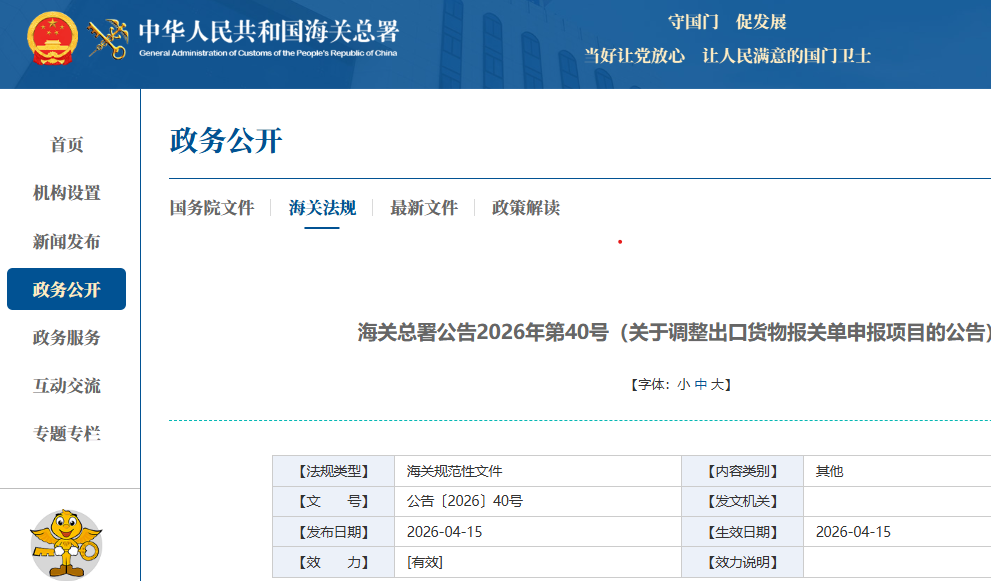
In accordance with GAC Announcement No. 40 of 2026, the export declaration single window system has been officially updated with two new key fields:Export Control & Prohibited/Restricted Identification CodeandExport Control & Prohibited/Restricted Declaration Elements. These are conditionally mandatory fields. All export declarations must now comply with the new rules. Failure to do so will result in immediate rejection, targeted inspections, and shipment delays.
As your end-to-end logistics partner, we have completed internal training and system adaptation. Below we clearly explain standard operating procedures for staff, client cooperation requirements, and a checklist of common pitfalls to ensure your shipments clear customs smoothly, without delays or detention.
First, Understand: What Exactly Should These Two New Fields Contain?
1. Export Control & Prohibited/Restricted Identification Code
•Purpose:Quickly determine if the goods fall under export prohibition, restriction, or control.
•Requirement:Conditionally mandatory (must be selected if controlled; fill according to specifications if not controlled).
•Source:System dropdown menu within the Single Window. Manual input with incorrect/unapproved codes is prohibited.
2. Export Control & Prohibited/Restricted Declaration Elements
•Purpose:Provide supplementary information on the legal basis for control, license/permit details, technical parameters, and compliance statements.
•Key content:License/permit numbers, approval document numbers, technical parameters, clear statements that goods are not subject to controls, etc.
•Requirement:Truthful, complete, verifiable, and consistent with the declaration form, contract, invoice, and supporting documents.
In a nutshell:
If subject to controls→ both fields must be filled.
If not subject to controls→ fill with standardized wording (e.g., “None / Not subject to controls”) — doNOTleave blank!
Staff SOP — Follow Every Step, Get Approved Straightaway
Step 1: Upon Receiving Order – Mandatory “Three Checks”
1. Check HS Code:Compare with customs control lists to determine if it involves dual-use items, export controls, endangered species, dangerous goods, or license-required goods.
2. Check client documents:Verify if client has export license, approval documents, test reports, or filing certificates.
3. Check history:See if this HS code or client has recently been targeted for inspection, rejection, or flagged.
Step 2: Standard Filing Process (Single Window)
1. Go to Export Goods Declaration → Line Item level page.
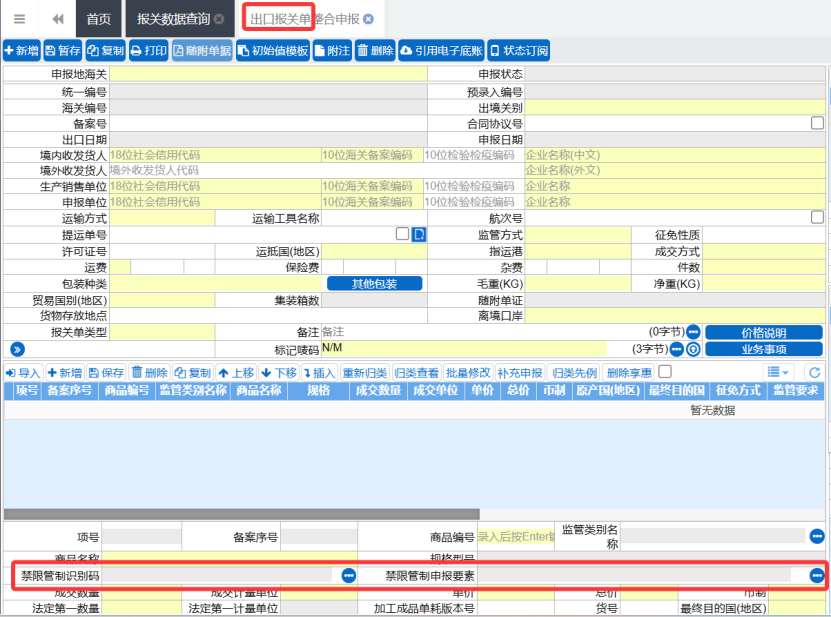
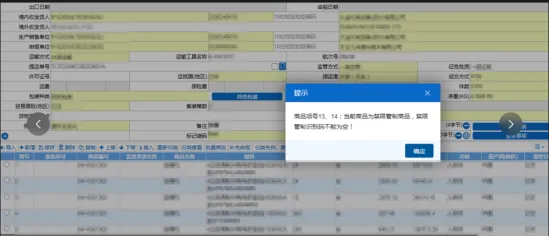
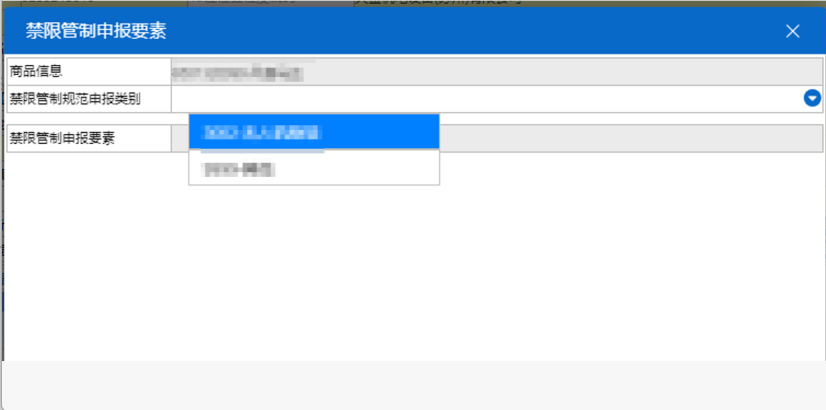
The Export Control & Prohibited/Restricted Identification Code and Export Control & Prohibited/Restricted Declaration Elements are usually grayed out. However, if the product name or HS code is potentially subject to controls, a prompt will appear during declaration, requiring you to fill in these fields.
As shown in the example below:
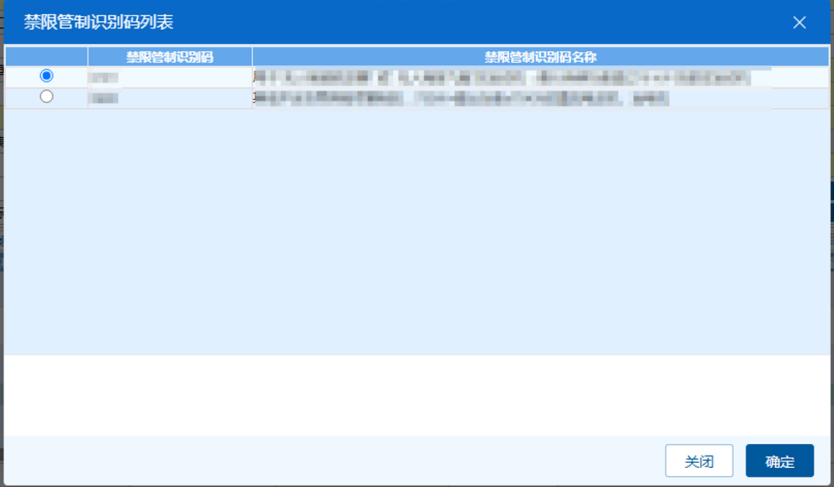
2. Locate the new field: Export Control & Prohibited/Restricted Identification Code.
◦ If subject to controls: Select the corresponding code.
◦ If not subject to controls: Select “Not controlled / None” (follow Single Window standard options).
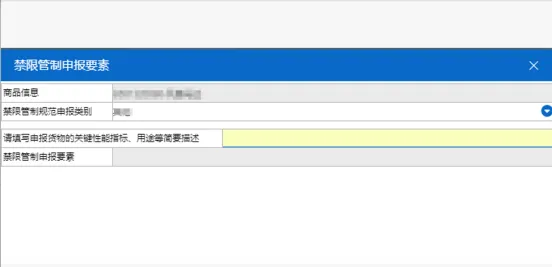
3. Fill in Export Control & Prohibited/Restricted Declaration Elements.
◦ If subject to controls: Provide license/permit number, approval document number, key parameters, validity period.
◦ If not subject to controls: Use standardized wording, e.g.:
“These goods are not subject to export prohibition, restriction, or control. The declared information is true and accurate.”
Finally, briefly describe the key performance indicators, intended use, etc., for the declared goods.
4. Save → Validate → Double-check before submitting.
Step 3: Compliance Red Lines (Staff Must Memorize)
❌No blank fields, no garbled characters, no vague descriptions
❌No “declare first, obtain documents later” or “ship first, complete formalities later”.
✓Four-way consistency between license/permit number, HS code, product name, specifications/parameters.
✓Always follow the latest customs guidelines for Single Window filing
Client Cooperation Checklist — Provide These for Smooth Clearance
To avoid shipment delays and extra charges, please provide the following information:
1Accurate HS code, product manual, end use, material composition, technical parameters.
2Indicate whether the goods involve: export controls, dual-use items, hazardous chemicals, required licenses, endangered species, IP-sensitive items.
3Original or electronic copies of relevant documents: license, approval document, test report, filing receipt.
4Written confirmation (template available from us) on whether the goods fall under export prohibition/restriction/control.
Important Reminder:
Misdeclaration, omission, or false declaration will directly trigger targeted inspection, rejection, penalties, and negatively impact your corporate credit rating and future customs clearance.
Three Most Common Mistakes — Avoid These Pitfalls
1Leaving fields blank→ System directly rejects the declaration.
2Selecting incorrect identification codethat does not match the goods → High probability of targeted inspection.
3Incomplete declaration elementse.g., just writing “None” without a proper compliance statement → Returned for manual review.
What We Have Already Done to Support You
✓All staff have completed special training on Announcement No. 40 and are certified.
✓Our customs declaration system has been updated and adapted, with automatic validation reminders for the new fields.
✓We have established a rapid review checklist for controlled goods – immediate risk assessment upon order receipt.
✓7×12 hours customs support, with single-check-per-shipment and dedicated second-person review.
✓Free client services: HS code pre-screening, document verification, declaration element templates.
If You Have Any Questions, Please Contact Us
Customs Helpline:Your designated contact / company customer service
Legal Basis:GAC Announcement No. 40 of 2026
Filing Guidelines:China International Trade Single Window official website – latest specifications.
A small step in compliant filing leads to smooth customs clearance. With our professional execution and rigorous checks, we will help you steadily navigate the new rules, ensuring on-time departure, smooth clearance, and trouble-free transit for every shipment.
Post time: Apr-29-2026